The term Smart Blue Tech refers to the innovative technologies that are transforming how we manage, protect, and utilize ocean resources in a sustainable manner. As we move into 2025, the role of Smart Blue Tech in driving sustainability and economic growth within the blue economy becomes even more critical. This emerging field leverages cutting-edge technologies like AI, IoT, blockchain, and marine biotechnology to revolutionize how we interact with our oceans, seas, and coastal regions.
In this article, we will explore the top Smart Blue Tech Trends 2025 and how they are poised to change the landscape of marine conservation, resource management, and environmental protection.
1. AI and Machine Learning in Ocean Monitoring

The integration of AI and machine learning in ocean monitoring is revolutionizing how we track and understand marine ecosystems. These technologies enable the collection, processing, and analysis of vast amounts of data from various sources, including satellites, drones, sensors, and underwater vehicles.
Key Applications:
- Marine Ecosystem Health Monitoring: AI systems will analyze oceanic data to detect and track changes in marine ecosystems. This could include identifying shifts in coral reefs, detecting the movement patterns of endangered species, or monitoring the health of fish populations. Machine learning algorithms will allow scientists to predict and respond to ecological disruptions faster, enhancing conservation efforts.
- Pollution Detection and Management: Real-time pollution monitoring is one of the most promising applications of AI in ocean conservation. AI-powered systems will analyze data from environmental sensors to detect pollutants like plastics, oils, and chemicals. This technology can identify pollution hotspots and track its movement, making it possible to deploy clean-up operations more efficiently.
- Climate Change Modeling: AI will play a critical role in predicting the impact of climate change on ocean health, including sea-level rise, ocean acidification, and the warming of ocean waters. AI models will provide valuable insights into how these changes will affect marine ecosystems, helping policymakers make informed decisions about mitigation and adaptation strategies.
You may also like to read this:
12 Latest Smart Blue Technology Developments 2025
Smart Blue Technology Latest News: Smart Cities And More
Smart Blue Tech Innovations: Revolutionizing Sea Futures
Smart Blue Technology Updates: Shaping The Future Of Oceans
Smart Blue AI News: Revolutionizing Marine Conservation
Top 10 Emerging Future Tech Innovations Transforming 2025
2. Internet of Things (IoT) for Marine Conservation
The Internet of Things (IoT) enables the deployment of interconnected devices and sensors across vast ocean and coastal regions. These IoT devices will collect real-time data on environmental conditions, making it easier to track ocean health and manage marine resources.
Key Applications:
- Smart Buoys for Data Collection: IoT-powered buoys will be deployed across oceans and coastal areas to measure water temperature, salinity, pollutants, and other environmental factors. The data collected will be used to improve climate forecasting models, enhance marine resource management, and provide early warnings for potential environmental threats, such as algal blooms or changes in water quality.
- Autonomous Underwater Vehicles (AUVs): These IoT-enabled robots will explore and monitor underwater ecosystems, from coral reefs to deep-sea environments. Equipped with cameras and sensors, AUVs will track endangered species, clean up debris, and monitor coral health. The real-time data gathered will help scientists understand how ecosystems are changing and support the restoration of damaged habitats.
3. Blockchain for Transparent Resource Management
Blockchain technology is gaining traction in marine conservation efforts due to its ability to provide secure, transparent, and immutable records of resource transactions. In 2025, blockchain will be used to ensure that marine resources, including fish stocks and ocean minerals, are harvested sustainably and responsibly.
Key Applications:
- Sustainable Fishing Practices: Blockchain will enhance traceability in the seafood supply chain, ensuring that fish and seafood products come from sustainable sources. This will help combat illegal, unreported, and unregulated (IUU) fishing practices. By verifying the origin of fish products, consumers can make informed choices, and fisheries can comply with sustainability standards.
- Ocean Conservation Fund Management: Blockchain will enable transparent management of funds allocated for marine conservation efforts. It will allow for secure tracking of donations, investments, and government spending on marine protection initiatives, ensuring accountability and trust in conservation programs.
4. Marine Biotechnology for Pollution Control and Ecosystem Restoration
Marine biotechnology leverages the biological properties of marine organisms to create solutions for ocean pollution and ecosystem restoration. By 2025, marine biotechnology will have advanced significantly, providing new tools for addressing some of the most challenging environmental issues facing the oceans.
Key Applications:
- Bioremediation: One of the most promising applications of marine biotechnology is the use of genetically engineered marine organisms to break down pollutants, such as plastics, oils, and heavy metals. Marine microorganisms, such as bacteria and algae, can be engineered to absorb and degrade harmful substances in the ocean, providing an environmentally friendly solution to ocean pollution.
- Marine Pharmaceuticals and Sustainable Resources: Marine organisms, particularly those found in deep-sea environments, are known for their unique biochemical properties. These organisms can be used to develop new drugs and medical treatments, offering significant advances in healthcare. At the same time, sustainable harvesting of these organisms ensures that marine resources are used responsibly.
5. Sustainable Aquaculture Technologies
Aquaculture, the farming of fish and other aquatic organisms, is one of the fastest-growing industries in the blue economy. However, traditional aquaculture practices often lead to environmental problems such as overfishing, water pollution, and habitat destruction. Smart Blue Tech will help transform aquaculture into a more sustainable and efficient industry.
Key Applications:
- Smart Feeding Systems: AI-powered systems will optimize the feeding schedules and nutrient delivery for farmed fish, reducing feed waste and minimizing the environmental impact of aquaculture. These systems will help ensure that fish receive the right amount of nutrition at the right time, reducing the need for antibiotics and chemicals.
- Fish Health Monitoring: IoT sensors will be deployed in aquaculture farms to monitor the health of fish in real-time. These sensors will track water quality, fish behavior, and health conditions, allowing farmers to detect diseases early and take preventive measures. By reducing the use of antibiotics and other chemicals, smart aquaculture practices can lead to healthier ecosystems and fish populations.
6. Smart Coastal Infrastructure for Climate Resilience
Coastal areas are highly vulnerable to the effects of climate change, including rising sea levels, coastal erosion, and extreme weather events. In 2025, Smart Blue Tech will be instrumental in creating resilient coastal infrastructure that can better withstand the impacts of climate change.
Key Applications:
- Flood Warning Systems: AI-powered flood warning systems will integrate data from sensors, weather forecasts, and satellite imagery to predict and track coastal flooding events. These systems will provide real-time alerts, helping communities prepare for and respond to rising water levels or storm surges.
- Smart Seawalls and Coastal Protection: Smart seawalls, equipped with sensors to monitor their structural integrity, will play a key role in protecting coastal communities from the impacts of climate change. These seawalls will be able to adapt to changing conditions, providing long-term resilience against rising seas and extreme weather events.
7. Ocean Energy Innovations
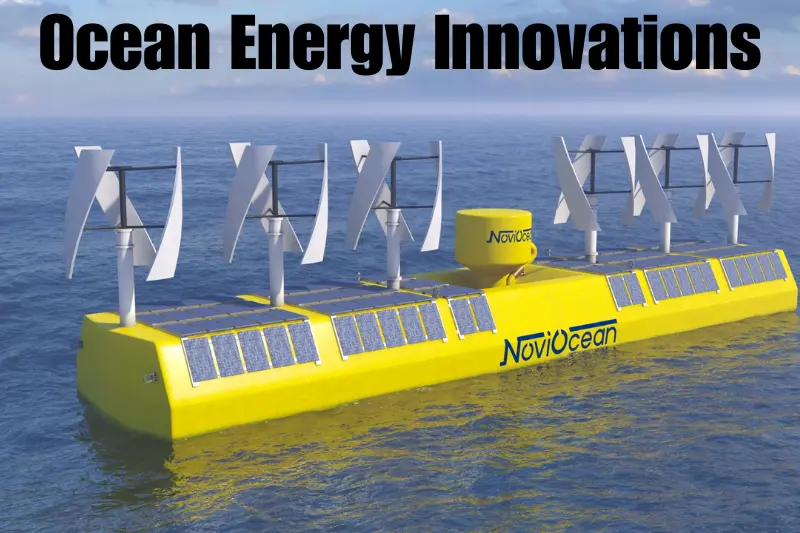
The ocean represents an untapped resource for renewable energy, with significant potential for generating clean electricity from tidal, wave, and ocean thermal energy. Smart Blue Tech is helping to unlock this potential by improving the efficiency and feasibility of ocean energy systems.
Key Applications:
- Tidal and Wave Energy Conversion: Smart Blue Tech will enhance tidal and wave energy converters, using real-time ocean data to optimize their performance. These energy converters will capture the kinetic energy of ocean currents and waves and transform it into electricity, providing a reliable and renewable source of energy.
- Ocean Thermal Energy Conversion (OTEC): OTEC systems harness the temperature difference between warm surface waters and cold deep-sea waters to generate electricity. In 2025, Smart Blue Tech will improve the efficiency of OTEC systems, enabling them to provide a steady supply of renewable energy to coastal communities and industries.
8. Smart Shipping Technologies for Sustainable Maritime Operations
The global shipping industry, responsible for transporting over 90% of the world’s goods, is under increasing pressure to reduce its carbon footprint. As one of the Smart Blue Tech Trends 2025, the maritime sector is adopting cutting-edge technologies that will drive sustainability by improving fuel efficiency, reducing emissions, and optimizing shipping routes.
By 2025, AI, IoT, and big data will be integral to making maritime operations smarter and greener. These technologies will enable the automation of shipping vessels, enhance route planning, and ensure better fuel management, ultimately reducing emissions and operating costs.
Key Applications:
- Autonomous Shipping: AI-driven unmanned vessels will become more widespread, reducing human error and increasing operational efficiency. These autonomous ships will utilize advanced sensors, GPS, and machine learning algorithms to navigate oceans more efficiently. The optimization of shipping routes in real-time will result in reduced fuel consumption, lower emissions, and fewer delays, leading to both environmental and economic benefits.
- Smart Ports: IoT sensors and AI technology will optimize port operations by tracking vessel arrivals, managing logistics, and reducing congestion. Smart ports will monitor the movement of cargo, enhancing efficiency and minimizing wait times for ships. This will reduce fuel waste, lower emissions, and ultimately reduce the carbon footprint of maritime operations.
- Emission Reduction Systems: Advanced emission reduction systems will be implemented in vessels to monitor and control the levels of pollutants released into the atmosphere. These systems will automatically adjust operations to meet environmental regulations, such as those set by the International Maritime Organization (IMO), ensuring compliance and reducing the impact of shipping on air quality and global warming.
9. Marine Data and Analytics for Decision-Making
In 2025, data-driven decision-making will be at the forefront of marine conservation, resource management, and policy-making. The vast amounts of data generated from sensors, satellites, and research programs will be processed through advanced data analytics tools, allowing for better monitoring, prediction, and management of marine ecosystems.
By utilizing machine learning and predictive analytics, governments, industries, and researchers will make informed decisions based on real-time environmental data, ensuring more effective conservation strategies and sustainable resource management.
Key Applications:
- Marine Spatial Planning: Governments and conservation organizations will use data analytics to develop marine spatial plans. These plans will ensure a balanced approach to resource extraction and ecosystem protection, considering the health of marine environments while also promoting sustainable economic activities like fishing and tourism.
- Predictive Environmental Models: Advanced predictive models will analyze real-time data to forecast future ocean conditions. By understanding the potential impacts of factors such as climate change, overfishing, and habitat destruction, these models will support effective policy-making and conservation strategies to protect marine biodiversity.
- Marine Ecosystem Simulations: Data analytics will also be used to create detailed simulations of marine ecosystems. These simulations will help scientists study how various human activities, such as fishing and coastal development, and environmental changes, such as ocean acidification and rising temperatures, influence biodiversity. These simulations will provide critical insights for conservation efforts and help prioritize actions to protect vulnerable ecosystems.
10. Marine Robotics for Ocean Exploration and Conservation
Robotics, especially underwater drones and autonomous vehicles, will be a game-changer in ocean exploration and conservation by 2025. These robots are equipped with state-of-the-art sensors, cameras, and AI algorithms that allow them to conduct in-depth surveys of marine environments, monitor ecosystems, and gather valuable data that would otherwise be difficult or impossible to obtain.
With advancements in robotics, the ability to explore deep-sea areas and conduct detailed environmental assessments will become more accessible, aiding researchers in better understanding marine biodiversity, pollution levels, and the effects of climate change.
Key Applications:
- Deep-sea Exploration: Underwater robots will dive into some of the most remote and unexplored areas of the ocean. Equipped with high-definition cameras and sensors, these robots will gather data on unknown marine species, unexplored ecosystems, and new underwater habitats. This data will enhance our understanding of deep-sea biodiversity and inform conservation strategies.
- Coral Reef Restoration: Robotics will be employed to monitor and restore coral reefs, one of the most threatened ecosystems on the planet. Robots will plant coral fragments, assess reef health, and track the success of restoration efforts. These technologies will provide critical insights into how to protect and regenerate coral reefs, which play a vital role in marine biodiversity.
- Pollution Cleanup: Autonomous underwater drones will be tasked with collecting plastic waste and other pollutants from the ocean floor. These robots will be able to operate autonomously, removing debris from areas that are difficult for humans to access. Their efficiency in cleaning up waste will contribute to reducing the growing problem of ocean pollution.
11. Blue Carbon and Carbon Sequestration Technologies
Blue Carbon refers to the carbon stored in coastal and marine ecosystems, including mangroves, seagrasses, and salt marshes. These ecosystems play a significant role in mitigating climate change by absorbing and storing carbon dioxide. In 2025, Smart Blue Tech will help enhance the monitoring, restoration, and protection of blue carbon ecosystems to maximize their carbon sequestration potential.
Innovative technologies will allow for real-time tracking of carbon storage, enabling better management of coastal ecosystems and promoting sustainable conservation practices.
Key Applications:
- Carbon Credits and Trading: Blockchain technology will play a pivotal role in ensuring transparency and trust in the blue carbon credit market. Blockchain will help verify and track the carbon credits generated by coastal ecosystems, enabling companies and countries to offset their emissions and support conservation projects. This will create an economic incentive for the preservation and restoration of blue carbon ecosystems.
- Coastal Ecosystem Restoration: Smart Blue Tech will enable the restoration of critical blue carbon ecosystems like mangroves, salt marshes, and seagrass beds. Advanced monitoring systems and AI-powered tools will help identify areas that require restoration efforts, track progress, and optimize conservation practices to enhance carbon sequestration. These ecosystems will become vital in climate change mitigation, as they store vast amounts of carbon and provide crucial benefits to marine biodiversity.
12. Education and Public Awareness through Smart Blue Tech
Raising awareness about ocean conservation and engaging the public in sustainable practices is essential for the long-term success of marine protection efforts. By 2025, Smart Blue Tech will help foster greater public understanding of the challenges facing oceans through immersive and interactive experiences powered by technologies like Augmented Reality (AR) and Virtual Reality (VR).
Key Applications:
- Virtual Ocean Tours: VR and AR technologies will allow individuals to experience the wonders of the ocean and understand the threats facing marine ecosystems. For instance, virtual tours of coral reefs will help people visualize the impacts of ocean acidification and climate change. These immersive experiences will foster a deeper connection to the ocean and inspire more sustainable behaviors.
- Public Engagement Platforms: Smart platforms powered by AI and IoT will allow people to participate in citizen science projects. These projects could involve collecting data on local marine environments, tracking wildlife sightings, or monitoring water quality. By engaging the public in hands-on conservation efforts, these platforms will build a sense of collective responsibility for ocean protection.
Conclusion
Looking ahead to 2025, Smart Blue Tech Trends 2025 will play a pivotal role in transforming the way we protect and utilize ocean resources. With innovations in AI, IoT, blockchain, and marine biotechnology, the blue economy will see more sustainable practices, from smarter ocean monitoring to transparent resource management.
These technologies will enhance marine conservation, improve resource management, and drive economic growth. AI will monitor ocean health, blockchain will ensure sustainable fishing, and marine robotics will aid in ecosystem restoration. Sustainable aquaculture, ocean energy, and carbon sequestration technologies will help preserve vital marine ecosystems for future generations.
In conclusion, Smart Blue Tech Trends 2025 are essential for a sustainable future, fostering a healthier marine environment while promoting economic growth. Collaborative efforts and public engagement will be key to realizing the full potential of these innovations.
FAQs
Q1. What is Smart Blue Tech?
It applies advanced technologies like AI, IoT, and blockchain to manage and protect ocean resources sustainably.
Q2. How does AI help in ocean monitoring?
AI analyzes ocean data to track ecosystem health, detect pollution, and predict climate impacts.
Q3. What role does blockchain play in marine conservation?
Blockchain ensures transparency, combats illegal fishing, and tracks sustainable seafood sources.
Q4. How will IoT impact marine conservation?
IoT gathers real-time data on water quality and ecosystem health, aiding in better resource management.
Q5. What is marine biotechnology?
Marine biotechnology uses ocean organisms for pollution control and ecosystem restoration.