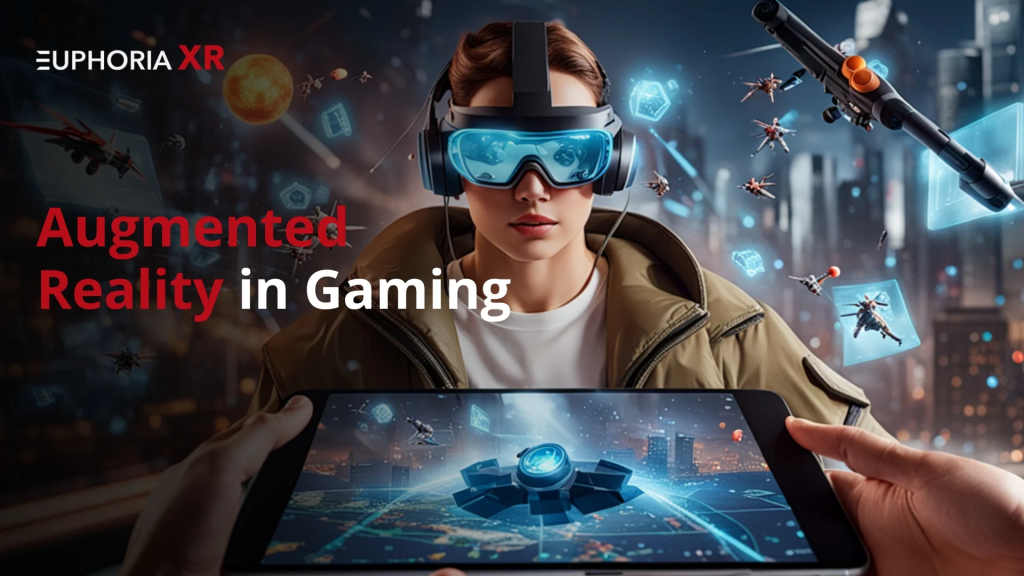
Imagine stepping into a world where the line between reality and fantasy blurs so seamlessly that your living room transforms into an epic battlefield, a mystical quest zone, or even a virtual casino with a dazzling array of slot game reels spinning in front of your eyes. Welcome to the realm of Augmented Reality (AR) in gaming—a revolution that is redefining how we play, interact, and experience entertainment. For decades, gaming was confined to screens, controllers, and keyboards. You could immerse yourself in a story, compete against others online, or challenge AI opponents—but it all existed within a flat, two-dimensional plane. Today, AR is tearing down that plane, inviting gamers into a world where digital objects live harmoniously alongside physical space, making the gaming experience more immersive, interactive, and exhilarating than ever before. But this isn’t just about adding flashy visuals; AR is addressing long-standing pain points in gaming—loneliness in single-player experiences, limitations of physical controllers, and the need for more dynamic, real-world integration. And the best part? Whether you are a casual gamer curious about AR or a hardcore enthusiast wondering how technologies like AR can enhance your slot game or pkv games experiences, there’s something here for everyone.
Breaking Down the AR Revolution in Gaming
At its core, AR overlays digital content onto our physical world using devices like smartphones, AR glasses, or headsets. Unlike Virtual Reality (VR), which immerses you completely in a synthetic environment, AR enhances the real world by adding interactive, digital layers. Think Pokémon Go, the game that became a cultural phenomenon and showed us the massive potential of AR. Players weren’t just staring at a screen—they were walking around their neighborhoods, discovering Pokémon in their own backyards, parks, and city streets. That simple innovation highlighted how AR could transform passive gaming into an active, real-world adventure. Beyond mobile devices, developers are now experimenting with AR headsets and wearables that make gameplay even more natural and intuitive. The idea is simple: the digital world doesn’t replace your reality—it enhances it, creating experiences that feel organic, engaging, and far more personal than traditional gaming.
Transforming Gameplay Mechanics and User Interaction
One of the biggest ways AR is changing gaming is by completely reinventing gameplay mechanics. Traditional gaming often confines players to buttons, joysticks, or touch screens. AR, however, allows you to interact with the game using your environment, gestures, and even voice commands. Imagine strategizing in a poker game where your cards appear on a virtual table in front of you, while your opponents’ avatars sit around it realistically, responding to your every move. Or envision a slot777 game where the reels emerge from the tabletop, spinning and twinkling in three dimensions, making every pull of the lever a tactile and visually mesmerizing event. This level of immersion not only heightens excitement but also introduces a sense of agency that was previously impossible in traditional gaming. Gamers now feel like active participants in the story, rather than passive button-pushers. Developers are taking note, experimenting with motion tracking, spatial awareness, and even environmental cues to make the player’s surroundings a core part of gameplay, creating experiences that are truly one-of-a-kind.
Elevating Social Interaction and Multiplayer Experiences
Gaming has always been social, but AR takes it to a new level. Multiplayer games have traditionally relied on voice chat or avatars displayed on a flat screen, which often feels detached. AR changes this by merging real and virtual social spaces. You can now host a poker game in your living room where digital avatars of friends appear at your physical table, laughing, reacting, and celebrating victories as if they were truly there. Similarly, AR-enabled cooperative or competitive games let players strategize in real-world spaces, turning your neighborhood park into a battlefield or a quest zone. This heightened sense of presence strengthens social bonds and encourages collaboration and competition in ways that conventional games simply cannot replicate. In fact, AR is addressing the pain point of social isolation in gaming by blending digital connectivity with physical interaction, making every session memorable and engaging on a deeply human level.
Gamifying the Real World: New Frontiers of Exploration
Perhaps one of the most fascinating aspects of AR gaming is its ability to merge adventure and exploration with everyday life. Traditional games require you to stay seated or confined to a gaming console, but AR games encourage movement and discovery. This is not just about exercise; it’s about gamifying the world around you. Imagine exploring a city and unlocking hidden in-game treasures that overlay historical landmarks, street art, or secret locations. This creates a dynamic, ever-changing game map that challenges players to look at their surroundings differently. AR is making the world itself a playground, expanding possibilities far beyond the limitations of screens and physical controllers. And for mobile gamers, this shift brings gaming seamlessly into daily routines, transforming commutes, park visits, or even coffee breaks into opportunities for immersive play.
The Future of Casinos and Gambling in AR
While AR is redefining adventure and role-playing games, its impact on casino-style games cannot be understated. Online gambling has always suffered from the inability to replicate the social and sensory excitement of real casinos. With AR, the line between online and physical casinos blurs. Imagine stepping into a virtual casino through AR, where you can walk past digital slot machines, sit at poker tables, and watch other players spin reels or place bets—all while staying in the comfort of your home. This combination of realism and convenience addresses long-standing frustrations with online gambling, like the lack of human interaction, the static nature of digital interfaces, and the absence of physical thrill. Gamers can now enjoy a slot game in a visually dynamic, interactive environment that feels alive and responsive, significantly enhancing engagement and satisfaction.
AR and Narrative-Driven Experiences
Another area where AR is making huge strides is storytelling in games. Narrative-driven experiences often suffer when limited to two-dimensional screens, where immersion depends solely on graphics and audio cues. AR, however, allows narratives to unfold around the player. Imagine walking through your kitchen only to see clues, characters, or magical portals appear as part of a quest. This spatial storytelling makes players feel like they are living the narrative, rather than just observing it. Developers can use environmental triggers, real-world objects, and location-based interactions to create deeply personalized and engaging stories. This innovation solves a common pain point for gamers seeking richer, more captivating experiences that go beyond repetitive missions or scripted gameplay. AR transforms ordinary spaces into story-rich environments, making each playthrough unique and unforgettable.
Technical Challenges and Opportunities
Of course, no discussion of AR in gaming would be complete without addressing the technical hurdles. While the promise is enormous, the technology behind AR is complex. Developers face challenges related to spatial mapping, latency, device compatibility, and creating realistic interactions between digital and physical objects. Poorly implemented AR can break immersion, causing frustration rather than excitement. However, these challenges are also opportunities. As AR hardware improves—lighter, more ergonomic headsets, faster processors, and better sensors—developers can push the boundaries even further. Cloud computing, AI, and 5G networks are also accelerating AR’s potential, enabling real-time multiplayer interactions and highly detailed virtual overlays without lag. For gamers, this means a future where AR experiences are smoother, more responsive, and incredibly lifelike, bringing the dream of fully integrated AR worlds closer than ever.
AR in Competitive and eSports Gaming
Competitive gaming and eSports are also undergoing transformation thanks to AR. Imagine a first-person shooter where players use physical movement in a designated space to dodge attacks, strategize, or aim, while spectators view the game through immersive AR broadcasts. AR introduces a new layer of skill and strategy that goes beyond hand-eye coordination on a keyboard or console controller. It also offers fresh opportunities for tournaments and fan engagement, as audiences can interact with AR elements in real-time, enhancing excitement and immersion. This innovation addresses the pain point of viewer fatigue in eSports, providing dynamic ways to experience competition beyond passive observation.
The Long-Term Impact: AR as a Lifestyle
Ultimately, AR is more than a gaming trend—it’s becoming a lifestyle. It’s changing how we interact with technology, socialize, exercise, and consume entertainment. By seamlessly integrating games into the physical world, AR transforms our everyday spaces into canvases for creativity, exploration, and fun. It’s also democratizing gaming experiences, as players of all ages and skill levels can engage with AR in ways that feel natural and intuitive. And as AR continues to evolve, games like slot game or poker game experiences are just the beginning—future innovations could combine AR with AI, haptics, and wearable tech to create hyper-realistic simulations and deeply personal entertainment journeys.
Conclusion: A Future Where Imagination Meets Reality
The future of gaming is no longer confined to screens. Augmented Reality is turning everyday life into a playground, where digital and physical realities blend seamlessly to create richer, more interactive, and deeply human experiences. From immersive narrative quests and social multiplayer adventures to reimagined casino and competitive games, AR addresses long-standing pain points while opening entirely new avenues for creativity and engagement. Gamers can now explore the world, socialize, compete, and even gamble in ways that were unimaginable just a few years ago. The promise of AR is vast, and its impact on gaming is profound, reshaping not just how we play, but how we experience reality itself. For anyone who loves the thrill of discovery, the excitement of competition, or the simple joy of play, the AR-powered gaming revolution is here—and it’s only just getting started.