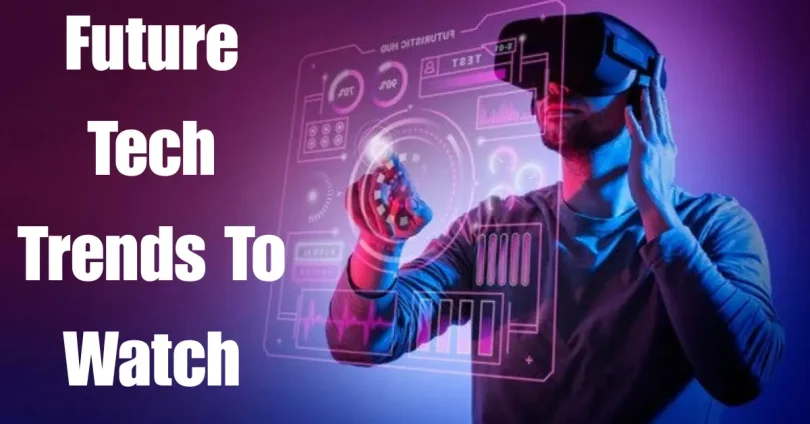

As we advance further into the digital age, the pace of technological change is accelerating rapidly, bringing with it groundbreaking innovations that are transforming every aspect of life. From artificial intelligence and machine learning to quantum computing and biotechnology, these innovations are not just shaping the future—they’re redefining the present. Understanding Future Tech Trends to Watch is essential for anyone looking to stay ahead in a world driven by data, automation, and connectivity.
These trends are influencing how businesses operate, how governments make decisions, how educators teach, and how individuals interact with technology daily. Whether you’re a tech enthusiast, a business leader, a policymaker, or simply curious about what lies ahead, gaining insight into these transformative trends will help you navigate the future with confidence.
This in-depth article explores the Future Tech Trends to Watch, offering detailed insights into how each emerging technology will impact industries, economies, and societies worldwide.
1. Artificial Intelligence (AI) and Machine Learning (ML)

AI and ML are no longer just buzzwords—they’re foundational technologies driving innovation across sectors. From virtual assistants and recommendation engines to autonomous systems and healthcare diagnostics, AI is redefining possibilities.
What’s Next?
- Generative AI: Tools like ChatGPT, DALL·E, and Midjourney are revolutionizing creative tasks such as content creation, coding, and design. Expect broader integration across advertising, entertainment, education, and journalism.
- AI-Powered Automation: AI is transforming customer service via chatbots, improving diagnostic accuracy in healthcare, and enhancing manufacturing with predictive maintenance.
- Explainable AI (XAI): As AI takes on more critical decision-making roles, XAI ensures transparency and builds trust by making algorithms interpretable and auditable.
2. Quantum Computing
Quantum computing offers a fundamentally new way of processing data using the principles of quantum mechanics. By utilizing qubits, quantum computers can perform complex calculations much faster than classical computers.
Why It Matters:
- Breakthrough Applications: Solving intractable problems in areas like climate modeling, financial modeling, cryptography, and drug development.
- Industry Leaders: Companies like IBM, Google, Intel, and D-Wave are making substantial advancements in quantum hardware and algorithms.
- Strategic Investments: Governments and tech giants are investing billions into quantum research to gain a competitive edge in national security and advanced science.
You may also like to read this:
AI And Tech Trends News: Robotics And Sustainability In 2025
Top Tech Trends Shaping The Future In 2025 And Beyond
Top Tech Trends 2025: How New Tech Will Change The World
Top 10 Emerging Technology Trends Of The Future
Latest Tech Trends and Insights in 2025: What You Must Know
3. Extended Reality (XR): AR, VR, and MR
XR encompasses Augmented Reality (AR), Virtual Reality (VR), and Mixed Reality (MR), merging physical and digital worlds for immersive experiences.
Key Developments:
- Metaverse Integration: Platforms like Meta Horizon Worlds and Microsoft Mesh are enabling real-time virtual collaboration, events, and entertainment.
- AR in Retail and Navigation: Try-before-you-buy experiences, AR-guided tours, and real-time overlays in maps are improving user convenience.
- VR in Healthcare: Virtual surgeries and immersive training scenarios are helping medical professionals refine their skills in safe, simulated environments.
4. 5G and Future 6G Networks
The deployment of 5G is transforming how devices communicate, providing faster speeds, lower latency, and increased connectivity.
What to Expect:
- IoT Expansion: Smart cities, autonomous vehicles, and connected factories are being powered by 5G infrastructure.
- 6G Vision: With expected deployment around 2030, 6G aims to offer speeds 100x faster than 5G, with AI-native networks, holographic communications, and ultra-low power consumption.
5. Biotechnology and Genetic Engineering
The fusion of digital technology with biology is unlocking powerful tools to manipulate life itself, transforming medicine, agriculture, and environmental science.
Breakthroughs Ahead:
- Gene Editing: CRISPR and related technologies enable precise alterations of DNA, offering cures for inherited and chronic diseases.
- Synthetic Biology: The development of engineered organisms to create new materials, foods, and drugs.
- Personalized Medicine: Tailoring treatments based on individual genetic profiles, leading to better efficacy and reduced side effects.
6. Sustainable and Green Technologies
Climate change mitigation is a global priority, and technology is playing a critical role in building a sustainable future.
Green Innovations Include:
- AI-Powered Renewable Energy: Optimizing solar and wind energy production using predictive algorithms.
- Smart Grids: Intelligent energy distribution systems that balance load, reduce waste, and integrate renewable sources.
- Sustainable Agriculture: Vertical farming, precision irrigation, and sensor-based soil analysis are reducing resource consumption and increasing crop yields.
7. Blockchain and Decentralized Systems
Blockchain’s decentralized ledger technology is revolutionizing data integrity, security, and transparency across industries beyond cryptocurrency.
Emerging Applications:
- Decentralized Finance (DeFi): Empowering users with financial services without traditional banks.
- Non-Fungible Tokens (NFTs): Enabling digital ownership of art, media, and virtual goods.
- Supply Chain Transparency: Real-time tracking and verification of goods from origin to shelf, reducing fraud and inefficiencies.
- Web3: A more open, user-controlled internet emphasizing privacy, security, and decentralization.
8. Robotics and Automation

Robotics has moved beyond industrial settings into homes, hospitals, and service industries. Smart, collaborative, and autonomous robots are transforming operations.
What’s Changing:
- Cobots: Robots designed to safely work alongside humans in manufacturing, healthcare, and logistics.
- AI-Powered Robots: Capable of adapting to unstructured environments, performing delicate surgeries, or handling hazardous tasks.
- Autonomous Drones: Used for package delivery, infrastructure inspections, agriculture, and emergency response.
9. Edge Computing
Edge computing processes data closer to the source, reducing reliance on centralized cloud systems and enabling faster responses.
Benefits:
- Real-Time Processing: Essential for applications like self-driving cars, AR, and industrial automation.
- Enhanced Security: By processing data locally, sensitive information is less exposed to cyber threats.
- Reliability: Supports operations in areas with limited connectivity or bandwidth constraints.
10. Human-Machine Interfaces (HMI)
Advancements in HMI are redefining how we interact with machines, making interfaces more intuitive, immersive, and personalized.
Innovations to Watch:
- Brain-Computer Interfaces (BCIs): Companies like Neuralink are working on direct brain-to-device communication to assist disabled users and explore cognitive enhancement.
- Gesture and Eye Tracking: Improving user interactions in AR/VR and gaming environments.
- Emotion Recognition Systems: Analyzing facial expressions, voice, and biometrics to tailor experiences and assist mental health diagnostics.
11. Wearable and Implantable Tech
Smart wearable devices are evolving into powerful health and performance tools, while implantable tech pushes the boundaries of human augmentation.
Key Applications:
- Health Monitoring: Real-time tracking of vitals like heart rate, glucose levels, and blood oxygen for proactive health management.
- Smart Glasses & Hearing Aids: Enhancing communication, productivity, and accessibility.
- Bio-Implants: Brain chips and RFID implants are enabling new levels of control and communication between humans and devices.
12. Autonomous Systems and Smart Mobility
Autonomous systems are poised to overhaul transportation, logistics, and delivery through intelligent navigation and coordination.
The Road Ahead:
- Self-Driving Vehicles: With advancements in AI and sensors, vehicles are learning to navigate urban environments safely and efficiently.
- Urban Air Mobility: Drones and air taxis are emerging as alternatives to congested ground travel.
- Smart Traffic Ecosystems: Integrating sensors, AI, and vehicle-to-everything (V2X) communication for improved road safety and reduced emissions.
13. Cybersecurity and Privacy Enhancements
As digital threats grow in complexity, cybersecurity is becoming more proactive, intelligent, and user-centric.
What’s Next:
- Zero Trust Architecture: A model where trust is never assumed and verification is continuous, enhancing security across networks.
- Quantum-Safe Encryption: Preparing for quantum computing’s potential to break traditional encryption methods.
- Privacy-Enhancing Technologies (PETs): Enabling secure data analysis without exposing individual data points, ensuring compliance and privacy.
Conclusion
The world is undergoing a profound technological transformation, with innovations reshaping how we communicate, work, heal, travel, and even think. From artificial intelligence and quantum computing to biotechnology and sustainable energy, these Future Tech Trends to Watch are not just glimpses of what’s coming—they are active forces already influencing our present. As industries adapt and new opportunities emerge, staying informed about these trends becomes critical for individuals, businesses, and policymakers alike.
Embracing these advancements with awareness and responsibility will be key to harnessing their full potential while navigating the challenges they bring. Whether you’re preparing for strategic investments, innovating in your field, or simply staying ahead of the curve, understanding these Future Tech Trends to Watch will empower you to shape a better, smarter, and more connected future.
FAQs
1. What are the top Future Tech Trends to Watch in 2025 and beyond?
Some of the top Future Tech Trends to Watch include Artificial Intelligence, Quantum Computing, Extended Reality (XR), 5G and 6G networks, Biotechnology, Blockchain, Robotics, Edge Computing, Human-Machine Interfaces, Wearable Tech, Autonomous Systems, and advanced Cybersecurity solutions.
2. Why is it important to stay informed about Future Tech Trends to Watch?
Understanding Future Tech Trends to Watch helps individuals, businesses, and governments stay competitive, make informed decisions, adopt emerging technologies early, and prepare for societal shifts driven by innovation.
3. How is Artificial Intelligence impacting Future Tech Trends to Watch?
AI plays a central role in many Future Tech Trends to Watch, powering advancements in automation, personalized services, predictive analytics, healthcare diagnostics, and creative tools like generative AI.
4. What industries will benefit most from Future Tech Trends to Watch?
Industries such as healthcare, manufacturing, finance, transportation, agriculture, and education are set to gain the most from Future Tech Trends to Watch due to automation, efficiency improvements, and new capabilities.
5. Are Future Tech Trends to Watch only relevant for tech professionals?
No. Future Tech Trends to Watch affect everyone—from educators and policymakers to entrepreneurs and consumers. These trends shape how we learn, work, travel, and interact with the world.