
The tech landscape is evolving at an astonishing pace, with innovations constantly transforming industries, reshaping economies, and altering the way we live and interact with the world. These rapid advancements are not just enhancing existing technologies but are also creating entirely new possibilities. As we approach 2025, the technological landscape is becoming increasingly interconnected, with emerging trends driving significant shifts across various sectors.
These innovations are not only revolutionizing the way businesses operate but also affecting healthcare, education, entertainment, and other crucial industries. From artificial intelligence and machine learning to quantum computing, 5G, and beyond, these trends are poised to fundamentally change how we live, work, and communicate in the coming years.
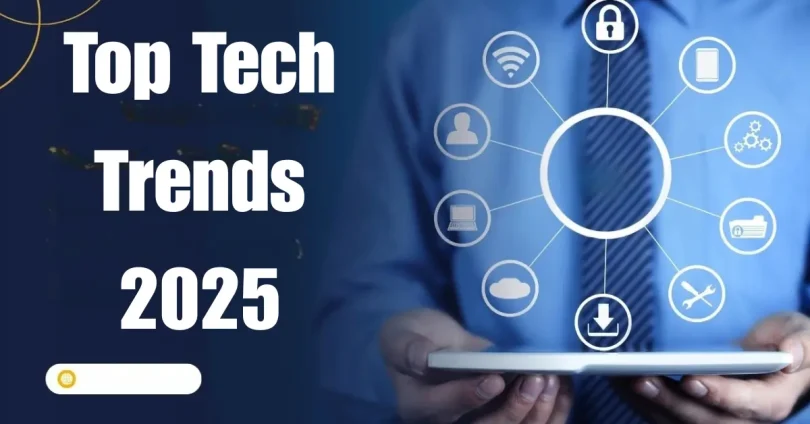
This article delves deeper into the top tech trends 2025, exploring how they will influence every facet of our lives—from the way we conduct business to how we learn, stay healthy, and entertain ourselves in a rapidly advancing digital world.
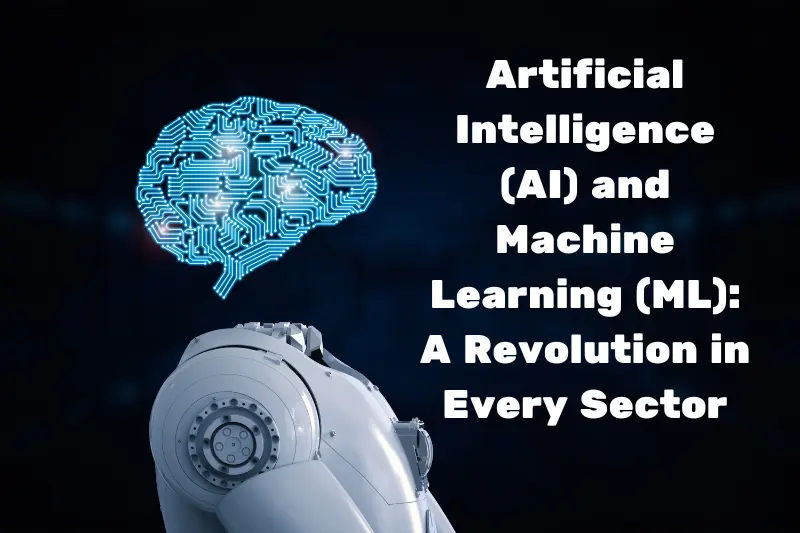
1. Artificial Intelligence (AI) and Machine Learning (ML): A Revolution in Every Sector
AI and ML in 2025
Artificial intelligence and machine learning continue to be the driving forces behind technological advancements. By 2025, AI and ML will have permeated nearly every industry, bringing about significant changes in how businesses operate and how people interact with technology.
- AI-Driven Automation: Automation powered by AI will see widespread adoption across industries. From manufacturing to customer service, AI will streamline operations, increase productivity, and reduce operational costs. Self-learning algorithms will enable AI to handle complex tasks, perform predictive analytics, and make data-driven decisions in real-time.
- Enhanced Personalization: AI will enable more personalized customer experiences, with algorithms analyzing vast amounts of data to predict user behavior, preferences, and needs. Retailers, content platforms, and service providers will utilize AI to deliver hyper-targeted products, services, and content.
- AI in Healthcare: AI will transform healthcare by enabling faster diagnoses, personalized treatments, and the development of new drugs. AI-powered diagnostic tools, such as AI-driven imaging and robotic surgeries, will continue to improve healthcare outcomes.
- Ethical AI and Responsible Development: As AI becomes more pervasive, discussions around ethical AI, bias, privacy, and transparency will intensify. Governments, tech companies, and academia will focus on developing frameworks and standards for responsible AI development and deployment.
You may also like to read this:
Top Rated Gadgets Review: Best Gadgets You Need
Tech Gadgets Review And News: Discover The Best Gadgets
Latest Gadget Reviews 2025: Best Devices Of The Year
Top Future Tech Breakthroughs: AI, Robotics, Quantum Tech
Future Tech Predictions: Emerging Trends For 2025
2. Quantum Computing: Unlocking the Future of Problem Solving
The Quantum Leap
Quantum computing, once a theoretical concept, is now on the brink of becoming a practical reality. By 2025, quantum computers are expected to make significant strides, solving complex problems that are beyond the capabilities of classical computers.
- Quantum Advantage: Quantum computers will revolutionize industries such as cryptography, material science, and complex modeling. Tasks that currently take supercomputers weeks or months to solve, such as simulating chemical reactions or optimizing supply chains, could be completed in a matter of seconds.
- Quantum-Enabled Cybersecurity: As quantum computing advances, it will introduce both challenges and opportunities in cybersecurity. Quantum algorithms could break current encryption methods, prompting the development of quantum-resistant cryptography techniques.
- Commercialization of Quantum Tech: Leading tech giants and startups alike will continue to invest heavily in quantum computing research, bringing us closer to commercialization. Expect to see the first commercially available quantum processors and cloud-based quantum computing services by 2025.
3. 5G and Beyond: The Backbone of Connectivity
Ultra-Fast Networks
The global rollout of 5G networks will continue to gain momentum through 2025, enabling ultra-fast data speeds, lower latency, and greater connectivity across devices.
- Smart Cities: 5G will serve as the backbone for smart cities, enabling the seamless connectivity of IoT devices, autonomous vehicles, and public infrastructure. Real-time data analysis will lead to smarter traffic management, more efficient energy consumption, and improved urban planning.
- Edge Computing: With 5G’s low latency and high-speed capabilities, edge computing will become more prevalent. Data processing will shift from centralized data centers to the edge of the network, bringing faster data processing, reduced latency, and improved security.
- Enhanced Mobile Experiences: 5G will revolutionize mobile experiences, allowing for faster streaming, real-time gaming, and seamless communication. This will also lay the foundation for augmented reality (AR) and virtual reality (VR) applications, which will require high-speed internet connectivity.
4. Edge Computing and Decentralized Systems: The Shift Toward Localized Data Processing
Localizing Data for Speed and Security
Edge computing, the practice of processing data closer to its source rather than relying on centralized cloud data centers, will become increasingly important in 2025.
- Real-Time Decision-Making: Edge computing allows for real-time data processing, which is crucial for applications requiring instant decision-making, such as autonomous vehicles, industrial IoT devices, and health monitoring systems.
- Security and Privacy: With the rise of IoT devices, there is an increased demand for processing sensitive data locally to mitigate privacy concerns. Edge computing reduces the need to send sensitive information to central servers, thereby enhancing data security.
- Industry Applications: Industries such as manufacturing, healthcare, and retail will adopt edge computing solutions to improve operational efficiency, reduce costs, and deliver faster, more personalized services.
5. Extended Reality (XR): Blurring the Line Between the Digital and Physical World
The Future of Immersive Technology
Extended Reality (XR), which encompasses virtual reality (VR), augmented reality (AR), and mixed reality (MR), will continue to evolve and play a transformative role in various industries by 2025.
- Metaverse Development: The concept of the metaverse, an interconnected virtual world where people can interact, socialize, and work, will take shape. XR technologies will be crucial in creating immersive virtual environments, offering users new ways to engage in entertainment, education, and commerce.
- Training and Simulation: XR will revolutionize training programs in sectors such as healthcare, military, and aviation. Medical professionals will use VR simulations for surgery practice, while industries will employ AR tools to guide technicians through complex tasks in real time.
- Enhanced Retail Experiences: AR-powered shopping experiences will allow customers to virtually try on products, visualize furniture in their homes, and make more informed purchasing decisions. This will reshape e-commerce and in-store experiences.
6. Blockchain and Decentralized Finance (DeFi): The Rise of Digital Trust
Blockchain’s Expanding Role
Blockchain technology will continue to disrupt industries by providing decentralized solutions for secure transactions, transparency, and digital trust.
- Blockchain in Supply Chain: Blockchain’s ability to provide an immutable record of transactions will revolutionize supply chains, offering greater transparency and reducing fraud. Industries such as food, pharmaceuticals, and luxury goods will benefit from blockchain to ensure product authenticity and traceability.
- Decentralized Finance (DeFi): DeFi will grow as more people seek alternatives to traditional banking and financial services. By 2025, decentralized lending, borrowing, and trading platforms will become more mainstream, with the potential to democratize financial access and challenge established financial institutions.
- NFTs and Digital Ownership: Non-fungible tokens (NFTs) will continue to evolve as a means of proving digital ownership. Beyond art, NFTs will be used for gaming, real estate, and intellectual property, creating new ways for creators and businesses to monetize digital assets.
7. Sustainability Tech: Green Innovation for a Better Future
Tech for a Sustainable Planet
Sustainability will be at the forefront of technological innovation in 2025, with green tech solutions addressing climate change, resource depletion, and environmental degradation.
- Renewable Energy Technologies: Advances in solar, wind, and energy storage technologies will drive the transition to renewable energy. Innovations in energy storage solutions, such as solid-state batteries, will make renewable energy more reliable and efficient.
- Carbon Capture and Clean Technologies: Carbon capture and storage (CCS) technologies will evolve to remove CO2 from the atmosphere and store it underground. Additionally, clean technologies in manufacturing, agriculture, and transportation will reduce carbon emissions and promote a circular economy.
- Sustainable Agriculture and Food Tech: Technologies such as vertical farming, lab-grown meat, and precision agriculture will help meet the growing demand for food while reducing environmental impact. These innovations will play a key role in addressing food security and sustainability challenges.
8. Robotics and Autonomous Systems: The Future of Automation

Robots in the Workforce
Robotics will continue to advance, with robots becoming more autonomous, capable, and integrated into society.
- Robotic Process Automation (RPA): In 2025, RPA will automate more complex business processes, from customer service to data analysis and supply chain management. Businesses will rely on robots to improve efficiency and reduce human error in repetitive tasks.
- Autonomous Vehicles: Self-driving cars, trucks, and drones will become more mainstream by 2025, transforming transportation, logistics, and delivery services. The integration of AI, 5G, and advanced sensors will enhance the safety and reliability of autonomous vehicles.
- Personal Assistants: Humanoid robots and AI-powered personal assistants will become more commonplace in homes and workplaces. These robots will handle daily tasks such as cleaning, delivery, and personal care, offering enhanced convenience and productivity.
9. Human-Machine Interfaces (HMIs): The Evolution of Interaction
Redefining the Human-Technology Connection
Human-machine interfaces (HMIs) are poised to redefine the way humans interact with technology. With advancements in neurotechnology, brain-computer interfaces (BCIs), and gesture recognition, the way we communicate with machines is evolving rapidly.
- Brain-Computer Interfaces (BCIs): BCIs are one of the most promising innovations for 2025, enabling direct communication between the human brain and computers. These interfaces could revolutionize healthcare, particularly in the treatment of neurological disorders, by enabling individuals to control prosthetics, wheelchairs, or even computer systems purely through thought.
- Wearable Tech and AR Glasses: Smart glasses and other wearable devices will continue to evolve, providing users with immersive augmented reality experiences. With advances in AI and HMI, these devices will offer more natural, intuitive ways to interact with digital environments, be it for navigation, gaming, or real-time data display.
- Gesture and Voice Recognition: Advances in natural language processing (NLP) and gesture recognition will make interacting with devices more seamless. Voice commands will become the standard interface for many applications, from controlling smart homes to navigating through software, while gesture-based interactions will become more refined and responsive.
10. Cybersecurity in the Age of Digital Transformation
The Need for Robust Digital Defense
As technology continues to advance, so do the challenges and risks associated with cybersecurity. The increasing amount of sensitive data being shared and stored online, coupled with the rise of connected devices, will make cybersecurity more critical than ever by 2025.
- AI-Powered Cybersecurity: AI will play a pivotal role in identifying and mitigating cyber threats in real-time. AI algorithms can detect unusual patterns, respond to attacks faster, and predict vulnerabilities before they are exploited. Cybersecurity solutions will evolve to proactively defend against an ever-growing range of cyberattacks.
- Zero Trust Architecture: By 2025, zero trust security models will become the standard. This approach assumes no one inside or outside an organization’s network is trusted by default, requiring continuous verification for users, devices, and applications. This model is essential for protecting against evolving threats in increasingly complex network environments.
- Quantum-Resistant Encryption: As quantum computing develops, the need for quantum-resistant encryption methods will become paramount. Traditional encryption methods could be easily broken by quantum algorithms, leading to the widespread adoption of post-quantum cryptography to protect sensitive data in the quantum era.
11. Biotechnology and Health Tech: Revolutionizing Medicine
Tech-Driven Healthcare Innovations
The intersection of biotechnology and health technology will continue to advance at a rapid pace, with groundbreaking innovations transforming how healthcare is delivered, managed, and experienced by 2025.
- Gene Editing and CRISPR: Gene-editing technologies, particularly CRISPR, will continue to evolve and provide new ways to treat genetic disorders, potentially curing conditions that were once thought incurable. By 2025, gene therapy could become more accessible, paving the way for personalized medicine that targets the root causes of diseases.
- Wearables for Health Monitoring: The proliferation of health-focused wearables will enable real-time health tracking, allowing individuals to monitor critical health metrics such as heart rate, blood sugar levels, sleep patterns, and even mental health indicators. These devices will provide valuable data to both consumers and healthcare professionals, enabling more proactive health management.
- Telemedicine and Remote Care: Telemedicine will continue to expand, offering more advanced and accessible remote care solutions. With AI and AR technologies, doctors will be able to perform virtual consultations, conduct diagnostics, and monitor patients remotely, reducing the need for in-person visits and improving healthcare accessibility.
12. Space Exploration and Commercial Space Travel: Expanding Humanity’s Reach
The Next Frontier
Space exploration will enter an exciting new phase by 2025, as both government agencies and private companies continue to push the boundaries of what’s possible in space technology. The dream of space travel for the masses is inching closer to reality.
- Commercial Space Travel: Space tourism is expected to take off in 2025, with private companies like SpaceX, Blue Origin, and Virgin Galactic offering suborbital flights to the public. Space hotels and vacation packages in low Earth orbit could become a new industry, appealing to the ultra-wealthy and adventurous travelers.
- Mars Missions and Colonization: NASA and private companies are targeting 2025 for significant advancements in Mars exploration, including sending manned missions to the red planet. These missions will lay the groundwork for future colonization efforts, with the aim of making Mars a viable destination for human life.
- Satellite Internet: With the deployment of satellite constellations such as SpaceX’s Starlink, global internet coverage will become ubiquitous by 2025. Rural and remote areas that have been underserved by traditional internet infrastructure will gain access to high-speed broadband, further bridging the digital divide.
13. Smart Manufacturing and Industry 4.0: The Future of Production
The Automation of Industrial Processes
Smart manufacturing, powered by the Internet of Things (IoT), AI, and robotics, will define the next phase of industrial production by 2025, ushering in a new era known as Industry 4.0.
- IoT-Enabled Factories: IoT sensors will be deployed throughout manufacturing plants, providing real-time data on machine performance, inventory, and supply chain management. This data will be analyzed using AI algorithms to optimize production processes, predict maintenance needs, and reduce downtime.
- Robotic Process Automation: Robots will play an even more significant role in industrial manufacturing by 2025. These robots will work alongside humans, performing tasks such as assembly, quality control, and packaging with precision and efficiency.
- Additive Manufacturing (3D Printing): The adoption of 3D printing technologies will continue to rise, enabling manufacturers to create prototypes and finished products on demand. By 2025, 3D printing will be used to produce customized parts, reducing waste and supply chain dependencies.
14. Digital Twins: Virtual Models for Real-World Systems
Simulating and Optimizing Physical Assets
Digital twins, virtual representations of physical objects, processes, or systems, will become mainstream by 2025. These virtual models will be used to simulate real-world operations, monitor performance, and optimize systems in a digital space before making changes in the physical world.
- Smart Cities and Infrastructure: Digital twins will enable city planners and infrastructure managers to simulate urban environments, optimize traffic flow, predict energy consumption, and enhance disaster response systems.
- Manufacturing and Maintenance: Manufacturers will use digital twins to simulate entire production lines, allowing them to test new configurations, identify inefficiencies, and predict maintenance needs before they occur. This will improve uptime, reduce costs, and increase overall productivity.
- Healthcare Applications: In healthcare, digital twins could simulate the human body, enabling doctors to predict how a patient will respond to treatment, test surgical procedures, and provide personalized care plans based on a virtual model of the patient’s body.
Conclusion: Top Tech Trends 2025
The Top Tech Trends 2025 will revolutionize industries and daily life with innovations like artificial intelligence (AI), quantum computing, 5G, and extended reality (XR). These technologies will drive smarter decision-making, enhance connectivity, and open new opportunities across sectors. AI and machine learning will automate processes and personalize experiences, while quantum computing will unlock new problem-solving capabilities.
5G and edge computing will improve global connectivity and data processing, empowering smarter cities and more efficient operations. Industries like healthcare, finance, and manufacturing will benefit from decentralized technologies, robotics, and digital twins, improving sustainability and productivity.
By 2025, these Top Tech Trends will not only transform technology but also influence societal progress, making it essential to develop and deploy these innovations responsibly.
As industries continue to embrace digital transformation, even logistics solutions like a Car Shipping Company Manchester are leveraging intelligent tracking, automation and connectivity to meet evolving customer expectations.
FAQs
1. What are the top tech trends in 2025?
Key trends include AI, quantum computing, 5G, XR (virtual and augmented reality), robotics, blockchain, sustainability tech, and edge computing.
2. How will AI impact businesses in 2025?
AI will automate processes, enhance decision-making, improve customer experiences, and enable advanced data analytics.
3. What is quantum computing, and why is it important for 2025?
Quantum computing uses quantum mechanics to solve complex problems faster than classical computers, impacting fields like cryptography and materials science.
4. How will 5G technology impact industries in 2025?
5G will enable faster, more reliable connectivity, benefiting sectors like healthcare, manufacturing, and entertainment with improved efficiency and real-time data transfer.
5. What is extended reality (XR), and how will it evolve by 2025?
XR (VR, AR, MR) will revolutionize education, healthcare, retail, and gaming by providing immersive experiences for learning, training, and customer engagement.