


The digital revolution is far from over—in fact, it’s accelerating. Emerging Future Tech Innovations are reshaping industries, societies, and individual lives at a pace we’ve never witnessed before. These innovations promise to unlock new capabilities, solve complex problems, and redefine the boundaries of what’s possible. From artificial intelligence to quantum breakthroughs and human-machine collaboration, the technologies emerging today will dominate the world of tomorrow.
Let’s explore the most transformative Emerging Future Tech Innovations in detail.
1. Artificial Intelligence and Machine Learning

Artificial Intelligence (AI) leads the forefront of Emerging Future Tech Innovations, revolutionizing everything from data analysis to creative processes. With the evolution of machine learning, deep learning, and neural networks, AI systems are becoming smarter, faster, and more autonomous.
Notable Advancements:
- Generative AI tools such as OpenAI’s ChatGPT, Google’s Gemini, and Midjourney are redefining content creation, customer service, and storytelling.
- Predictive analytics in healthcare is enabling earlier disease detection and personalized treatment recommendations.
- AI-powered robotics in logistics and manufacturing are enhancing precision, reducing operational costs, and accelerating production cycles.
Why It Matters:
AI transforms how businesses make decisions, improves customer experience, reduces operational friction, and enables automation at scale—allowing humans to focus on higher-order tasks such as strategy and creativity.
You may also like to read this:
Smart Blue AI News: Revolutionizing Marine Conservation
Top Smart Blue Tech Trends 2025 For Marine Sustainability
12 Latest Smart Blue Technology Developments 2025
AI in 2025: Future Tech News And Trends Explained
Latest In Future Tech: AGI, Quantum Computing & More
Future Technology 2025: AI & ML Industry Impact
2. Quantum Computing
Quantum computing is poised to be one of the most disruptive Emerging Future Tech Innovations, promising computational power far beyond the capabilities of classical computers. By leveraging quantum bits or “qubits,” quantum computers can process enormous datasets and complex problems simultaneously.
Notable Advancements:
- Quantum supremacy has been achieved by companies like Google and IBM, demonstrating tasks completed exponentially faster than traditional systems.
- Quantum cryptography and encryption offer unbreakable data protection, critical for finance, defense, and communications.
- Quantum simulations are revolutionizing materials science and pharmaceutical R&D by simulating molecular interactions at atomic levels.
Why It Matters:
Quantum technology could unlock the next generation of innovation in cybersecurity, climate modeling, traffic optimization, and medical research—areas where classical computers hit performance ceilings.
3. Biotechnology and Genetic Engineering
Among Emerging Future Tech Innovations, biotechnology is empowering humanity to edit, replicate, and redesign biological life. Genetic engineering tools are advancing rapidly, enabling treatments for previously incurable diseases and increasing agricultural productivity.
Notable Advancements:
- CRISPR-Cas9 gene editing allows scientists to target and repair faulty DNA, paving the way to cure genetic disorders like sickle cell anemia.
- mRNA vaccine technology—pioneered during the COVID-19 pandemic—provides a flexible platform for rapid vaccine development.
- Synthetic biology is enabling the creation of lab-grown meat, biofuels, and sustainable materials.
Why It Matters:
Biotech innovations can improve public health, increase food security, and reduce environmental footprints by creating more resilient and adaptive organisms.
4. Extended Reality (XR): AR, VR, and MR
Extended Reality (XR)—which includes Augmented Reality (AR), Virtual Reality (VR), and Mixed Reality (MR)—is transforming digital interaction. These immersive technologies are some of the most exciting Emerging Future Tech Innovations in education, gaming, healthcare, and remote collaboration.
Notable Advancements:
- Apple Vision Pro and Meta Quest 3 are leading the way in next-gen mixed-reality devices.
- VR in surgical simulations is helping doctors train with lifelike experiences before performing actual surgeries.
- AR applications in industrial settings assist with real-time maintenance, repair, and operations guidance.
Why It Matters:
XR enhances how people learn, collaborate, and experience information, making education more engaging and remote work more connected.
5. 5G and the Rise of 6G
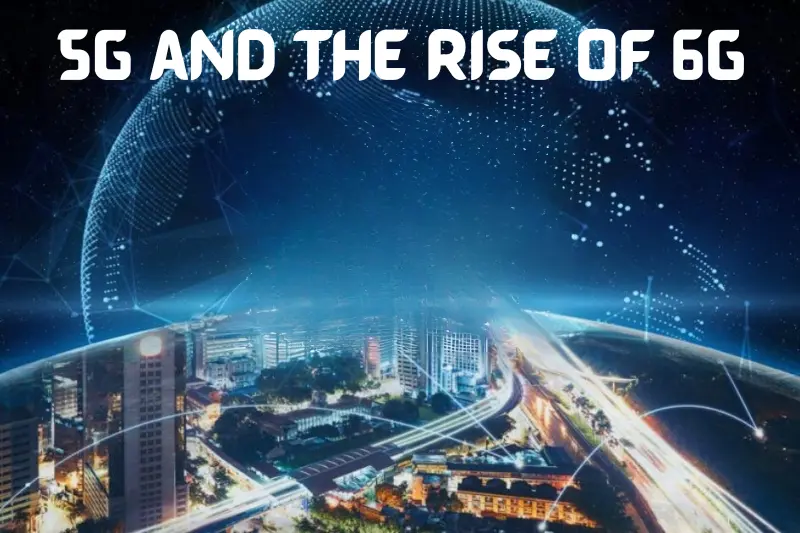
Advanced connectivity technologies like 5G and the upcoming 6G are foundational to many Emerging Future Tech Innovations. They enable ultra-low latency communication essential for real-time applications and data-intensive technologies.
Notable Advancements:
- 5G networks now support autonomous vehicles, smart grids, and IoT devices at scale.
- 6G research and prototypes aim to deliver speeds over 100x faster than 5G, with real-time AI integration.
- LEO (Low Earth Orbit) satellites, such as Starlink, are extending high-speed internet to underserved regions globally.
Why It Matters:
Next-gen networks will unlock new possibilities in immersive media, smart cities, remote healthcare, and automation by ensuring ultra-fast, reliable, and everywhere connectivity.
6. Autonomous Transportation and Smart Mobility
Autonomous transportation is rapidly becoming reality, representing a bold and transformative branch of Emerging Future Tech Innovations. From driverless cars to aerial taxis, these systems promise a safer and more efficient future.
Notable Advancements:
- Tesla and Waymo have developed self-driving vehicle platforms undergoing public testing.
- Urban Air Mobility (UAM) companies like Joby Aviation and Lilium are developing electric vertical take-off and landing (eVTOL) aircraft.
- AI-driven delivery drones are being tested for last-mile logistics in major cities.
Why It Matters:
Autonomous transport systems can reduce traffic fatalities, lower emissions, and provide greater accessibility, particularly in urban environments.
7. Blockchain and Decentralized Systems
Blockchain is evolving from crypto to a broader array of use cases, cementing its role among Emerging Future Tech Innovations. Its core strength lies in creating secure, transparent, and immutable systems.
Notable Advancements:
- Smart contracts enable self-executing legal agreements in finance and supply chain automation.
- Decentralized Finance (DeFi) is democratizing access to financial services worldwide.
- Blockchain traceability in food and pharma industries ensures authenticity and safety.
Why It Matters:
Decentralized systems reduce reliance on central authorities, increase transparency, and provide resilience against fraud and corruption.
8. Sustainable and Green Technologies
With climate concerns escalating, sustainable innovation is an essential pillar of Emerging Future Tech Innovations. These technologies aim to harmonize economic growth with environmental stewardship.
Notable Advancements:
- High-efficiency solar panels are harvesting more energy with less space.
- Carbon capture and storage (CCS) technologies are reducing industrial emissions.
- Electric and hydrogen-powered vehicles are displacing fossil fuels across global transport systems.
Why It Matters:
Green technologies not only mitigate climate change but also drive new industries, jobs, and sustainable economic models.
9. Human-Machine Interfaces and Wearable Tech
Blending biology with technology, human-machine interfaces represent one of the most transformative Emerging Future Tech Innovations. These technologies enhance our physical and cognitive abilities.
Notable Advancements:
- Neuralink and other BCI startups are building interfaces between the human brain and computers.
- Smart wearables like the Apple Watch and Oura Ring offer 24/7 biometric tracking.
- Bionic limbs and exoskeletons controlled by neural signals are restoring mobility and strength.
Why It Matters:
These innovations improve quality of life, enable medical breakthroughs, and offer new avenues for human enhancement and rehabilitation.
10. Edge Computing and Intelligent Infrastructure
Edge computing is redefining how data is processed, becoming a key enabler among Emerging Future Tech Innovations. It minimizes latency by analyzing data locally—closer to the source.
Notable Advancements:
- Edge AI processes data on devices like cameras and sensors without needing to send it to the cloud.
- Smart factories utilize edge computing for real-time monitoring, reducing downtime and waste.
- Intelligent infrastructure in smart cities enhances energy efficiency, traffic flow, and public safety.
Why It Matters:
Edge computing supports real-time decision-making, enhances cybersecurity, and is essential for scalable, responsive digital ecosystems.
Conclusion
Emerging Future Tech Innovations are not just reshaping industries—they are redefining the very fabric of how we live, work, and interact. These technologies, from artificial intelligence and quantum computing to sustainable energy and biotechnology, are unlocking new frontiers of possibility. They are solving problems once thought unsolvable, enhancing human potential, and creating smarter, more efficient systems across every sector.
As these innovations converge, they form a powerful ecosystem of progress—where intelligent automation, real-time connectivity, and human-centric design lead the way. However, with great potential comes great responsibility. To fully realize the benefits of these technologies, society must focus on ethical development, inclusive access, and sustainable deployment.
The future isn’t just arriving—it’s being built right now. And Emerging Future Tech Innovations are the foundation.
FAQs
1. What are Emerging Future Tech Innovations?
Emerging Future Tech Innovations are cutting-edge technologies that are currently being developed or adopted and are expected to have a major impact on industries, society, and daily life in the near future. These include AI, quantum computing, biotechnology, XR, 5G/6G, and more.
2. Why are these innovations important?
They address global challenges, improve efficiency, automate complex tasks, and open up entirely new markets and capabilities—ranging from healthcare and energy to transportation and communication.
3. How is artificial intelligence shaping the future?
AI is transforming decision-making, automation, and creativity. It powers tools like chatbots, self-driving cars, and predictive healthcare solutions, enhancing productivity and personalization across sectors.
4. What makes quantum computing different from classical computing?
Quantum computing uses qubits that can process multiple states simultaneously, offering exponential speed improvements for certain tasks like cryptography, simulations, and optimization problems.
5. How is biotechnology revolutionizing medicine?
Through advancements like CRISPR gene editing and mRNA vaccines, biotechnology is enabling precise, personalized treatments and rapid development of therapies for previously incurable diseases.


