


As we move deeper into the digital age, the phrase Future Tech News and Trends isn’t just a headline—it’s a guiding light for industries, investors, and innovators worldwide. Technology is evolving at an unprecedented pace, and 2025 marks a significant milestone where ideas that once seemed futuristic are now becoming reality.
This article explores the most significant trends, breakthroughs, and innovations shaping the future of technology in every domain—from artificial intelligence to green tech and beyond.
1. Artificial Intelligence: The Intelligent Backbone of Tomorrow
AI Assistants and Agents
AI technology has seen rapid advancements, particularly with AI assistants evolving into full-fledged digital agents. These agents are now capable of managing a wide array of tasks. They can book appointments, manage complex business operations, and even provide emotional support through virtual mental health counseling. Companies like OpenAI and Meta are pushing the boundaries of AI’s capabilities, developing systems that can act autonomously and intelligently across different platforms. The emergence of these AI-driven agents marks a significant shift in how humans interact with technology, creating smarter, more efficient digital environments.
AI in Business and Finance
AI is radically transforming the business world, especially in sectors like finance and enterprise operations. In the finance industry, predictive AI models are being used for smarter trading, fraud detection, and customer service. For example, hedge funds and investment firms are relying on AI-driven algorithms to analyze vast amounts of data, making real-time decisions that previously took human analysts days or weeks to process. In business, AI tools like chatbots and automation systems are improving customer interactions, reducing operational costs, and enhancing efficiency.
You may also like to read this:
Top Smart Blue Tech Trends 2025 For Marine Sustainability
12 Latest Smart Blue Technology Developments 2025
Top 10 Emerging Future Tech Innovations Transforming 2025
Future Technology 2025: AI & ML Industry Impact
Latest In Future Tech: AGI, Quantum Computing & More
2. Quantum Computing: The Next Frontier
Quantum computing is one of the most revolutionary technologies being developed today. Unlike traditional computers, which use binary bits (0s and 1s), quantum computers use qubits, which can represent multiple states simultaneously. This ability to perform calculations on multiple possibilities at once allows quantum computers to solve extremely complex problems at unprecedented speeds. Companies like IBM, Google, and startups like IonQ are racing to make quantum computing more accessible. Applications for quantum computing are vast, ranging from advancing medical research, improving cybersecurity, enabling better climate modeling, to optimizing logistics and supply chains. As quantum computing continues to develop, it is poised to transform industries and solve some of the world’s most pressing challenges.
3. Robotics and Automation: Replacing Repetition with Precision
Smart Factories and Cobots
The manufacturing sector is experiencing a profound transformation thanks to robotics and automation. One of the most exciting developments is the rise of collaborative robots, or “cobots.” These robots work alongside human workers in smart factories, helping with repetitive tasks and improving productivity. Cobots are designed to learn new tasks on the job, adapt to changing conditions, and collaborate seamlessly with human employees. They are playing an essential role in modernizing manufacturing operations, enhancing safety, precision, and operational efficiency.
Service and Delivery Robots
Another significant trend in Future Tech News and Trends is the increasing deployment of service robots in industries like hospitality, healthcare, and logistics. These robots are designed to handle a variety of tasks, such as preparing meals in restaurants, delivering room service in hotels, and performing basic medical procedures in hospitals. Additionally, autonomous drones are revolutionizing the delivery industry by enabling rapid, contactless delivery of goods. This shift toward automation is reshaping industries and changing how businesses and consumers interact with services.
4. Electric and Autonomous Vehicles: Driving into the Future
Electrification Across Brands
Electric vehicles (EVs) are at the forefront of Future Tech News and Trends. While Tesla has long been a leader in the EV market, many other companies are now joining the race. Traditional automakers like BMW, Ford, and GM are shifting their focus to electric mobility, while tech giants such as Apple and Xiaomi are also entering the market. Innovations in battery technology, faster charging stations, and improved efficiency are driving the widespread adoption of EVs. With governments worldwide offering incentives for green technologies, the transition to electric mobility is accelerating, and the future of transportation is looking increasingly electric.
Self-Driving Technology
In addition to electric vehicles, autonomous driving technology is one of the most significant technological trends in transportation. Companies like Waymo, Cruise, and Tesla are already rolling out self-driving vehicles with Level 4 autonomy, where cars can operate without human intervention in certain conditions. As the technology matures, we will see an increasing number of driverless cars, delivery vehicles, and even public buses. This shift will have a profound impact on urban mobility, transportation infrastructure, and the environment.
5. Smart Cities and IoT Integration: Building the Future of Urban Living
Smart cities are the perfect example of how Future Tech News and Trends are shaping the future of urban life. These cities leverage the Internet of Things (IoT), 5G, AI, and sustainable infrastructure to improve the quality of life for residents. Cities like Singapore, Dubai, and Barcelona are leading the charge by implementing smart traffic systems, real-time pollution monitoring, and AI-enabled policing. These innovations are designed to optimize resource management, reduce waste, and enhance the overall efficiency of urban spaces. As more cities adopt these technologies, the vision of smart, sustainable cities will become a reality.
6. Extended Reality (XR): Blurring Digital and Physical Realms
Augmented, Virtual, and Mixed Reality
Extended Reality (XR) technologies are pushing the boundaries of what is possible in entertainment, education, and work. XR encompasses augmented reality (AR), virtual reality (VR), and mixed reality (MR), which blend the digital and physical worlds. Tech companies like Apple and Meta are investing heavily in XR, creating immersive environments where users can interact with digital content in ways that feel natural and intuitive. Virtual campuses, digital twins of physical objects, and mixed-reality workspaces are becoming commonplace in industries ranging from gaming to training and design. These advancements in XR are transforming how we socialize, learn, and work.
7. Green Tech and Sustainability Innovation
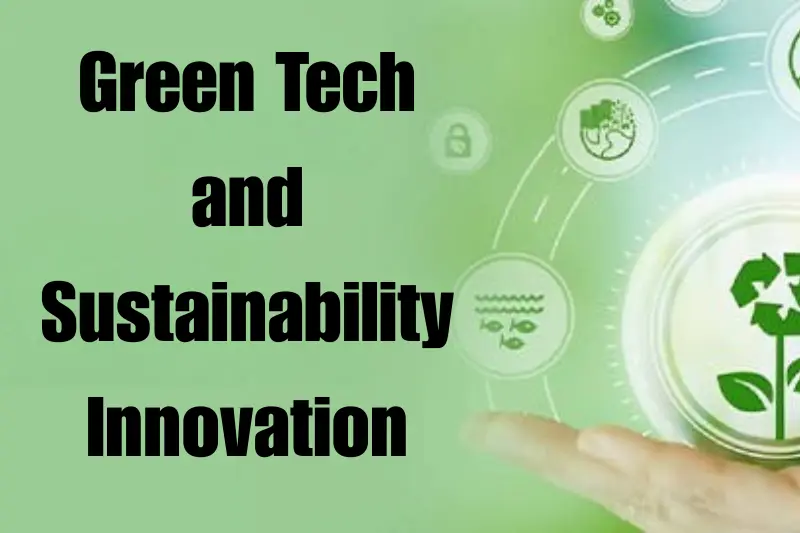
As environmental concerns become more urgent, sustainable technologies are becoming an essential part of Future Tech News and Trends. Green tech innovations include carbon capture and storage (CCS), smart energy grids, and eco-friendly batteries.
- Carbon Capture & Storage (CCS): Technologies that capture and store carbon dioxide are gaining traction, with startups developing facilities to remove CO₂ from the atmosphere.
- Smart Grids: These AI-powered grids optimize electricity use and reduce wastage, enabling a more efficient distribution of renewable energy.
- Eco-Friendly Batteries: Companies are working on solid-state and sodium-ion batteries to replace lithium-ion batteries, reducing environmental harm.
- Renewable Integration: Renewable energy sources like solar, wind, and tidal power are being integrated into power grids, with new storage technologies that allow energy to be stored more efficiently.
The rise of these technologies signals that sustainability is no longer optional—it’s a critical component of the future.
8. Biotechnology and Health Tech Advancements
Personalized Medicine
AI and biotechnology are merging to create personalized healthcare solutions tailored to individuals’ genetic profiles. By leveraging AI algorithms and genomic data, biotech companies are able to develop treatments that are uniquely suited to a patient’s genetic makeup. This approach is paving the way for gene therapies, customized vaccines, and personalized drug regimens that will improve outcomes and reduce side effects.
Non-Invasive Diagnostics
The healthcare industry is moving toward non-invasive diagnostic technologies. Devices such as breath analyzers, smart patches, and wearable sensors are making it possible to monitor and diagnose medical conditions without the need for invasive procedures. These devices are powered by AI algorithms that can analyze real-time data, providing accurate insights and enabling earlier detection of diseases.
9. Cybersecurity and Digital Trust
As digital threats become more sophisticated, cybersecurity is increasingly critical in Future Tech News and Trends. The rise of deepfakes, ransomware, and data breaches has made it essential for businesses and individuals to adopt more robust security measures. Key developments in cybersecurity include:
- Zero-Trust Security Models: These models assume that no one—inside or outside the organization—is trustworthy until proven otherwise.
- Blockchain Authentication: Blockchain technology is being used to provide secure, decentralized verification of identity and transactions.
- Quantum-Resistant Algorithms: As quantum computers become more powerful, new encryption techniques are being developed to safeguard data against quantum-level threats.
10. Space Tech and Interplanetary Ambitions
Space exploration is rapidly advancing, with private companies like SpaceX and Blue Origin pushing the boundaries of what’s possible in space travel. The development of reusable rockets and satellite internet services is lowering the cost of space access. Space tourism is inching closer to reality, and ambitious plans for Mars colonization and asteroid mining are becoming increasingly feasible. The future of space exploration will not only transform our understanding of the universe but could also provide the resources needed to support Earth’s growing population.
Conclusion
Future Tech News and Trends showcase the rapid evolution of technology across industries, from AI-driven assistants and quantum computing to electric and autonomous vehicles. These innovations are transforming how we live, work, and interact, creating smarter, more sustainable environments.
Smart cities, XR technologies, and green tech are shaping a future that is more efficient and eco-friendly, while advancements in biotechnology and health tech promise better, personalized healthcare. As cybersecurity evolves to meet new challenges, and space exploration advances, the boundaries of what’s possible continue to expand.
The future is unfolding today, with technology driving profound changes across all sectors. Staying informed about these trends is essential for navigating the next phase of innovation, where the possibilities are limitless.
FAQs
Q1. What role does AI play in future technology?
AI is transforming industries by automating tasks, enhancing decision-making, and enabling smarter operations in business, healthcare, and finance.
Q2. How will quantum computing impact industries?
Quantum computing will solve complex problems at unmatched speeds, revolutionizing fields like medicine, cybersecurity, and logistics.
Q3. What are cobots in manufacturing?
Cobots are robots that work alongside humans, enhancing productivity, safety, and precision in manufacturing environments.
Q4. How are electric vehicles shaping transportation?
EVs are replacing gas-powered cars, driven by innovations in battery tech and sustainability, accelerating the transition to green mobility.
Q5. What are smart cities?
Smart cities use IoT and AI to optimize resource management, improve efficiency, and enhance urban living through technologies like smart traffic and pollution monitoring.


